
Learn how to develop and balance your own gelato formula. This post will teach you how to create an Italian gelato recipe from scratch.

If you're looking to learn how to develop and balance your own gelato recipe, you've come to the right place! I'll walk you through how to create a gelato recipe completely from scratch.
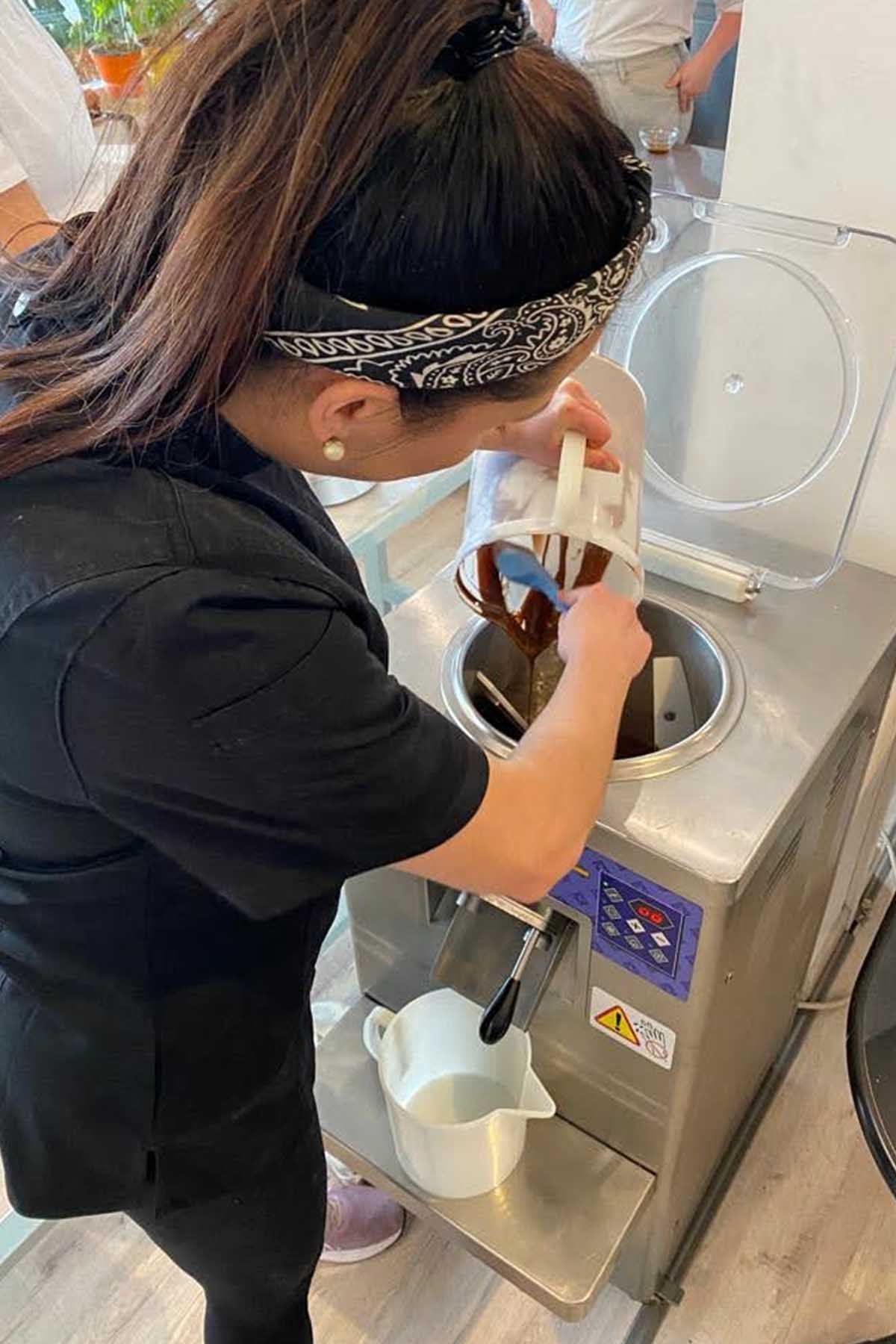
Everything I'm teaching you today about developing an authentic gelato recipe is straight from my culinary school training in Italy. I was able to learn from the best of the best about how to make Italian gelato.
If you have additional questions, throw them in the comments below, and I'll do my best to help you out!
What Makes Gelato Unique?
Just to make sure we're on the same page, let's quickly talk through the properties that make gelato unique.
Gelato is a frozen dessert that's made with specific ratios of water, fats, sugars, stabilizers, lean milk solids, and other solids.
Gelato is known for its dense texture and creamy taste. Many unique qualities about gelato make it different from ice cream and other popular frozen treats:
- It has an overrun (the amount of air incorporated into the gelato base) of 25% or under.
- It's stored around 5°F (-15°C) to 10.4°F (-12°C).
- It uses less fat than classic American ice cream.
- To serve, it's swiped with a pallet and then smashed down to remove the air.
Main Ingredients Used In Gelato
Before we can get into balancing a gelato formula, you need to have an understanding of what ingredients are typically used, along with what role they serve:
- Sugars: Sugars make up the majority of the solids in a gelato recipe. The ratio of sugar helps to determine how quickly the gelato will melt as well as lowers the freezing temperature of the mixture. Too much sugar in a recipe will cause the gelato to melt too quickly. The most common types of sugars include sucrose (granulated sugar), dextrose, glucose, honey, and fructose.
- Milk: The milk products help with the texture and structure of gelato. It also provides fats, proteins, and vitamins. Milk (whole, partially skimmed, skimmed), powdered milk (skimmed, whole), and condensed milk are commonly used. If you use unpasteurized milk, always be sure to properly pasteurize it during the cooking process.
- Milk Solids Not Fat (MSNF): MSNF includes the protein, lactose, and minerals in milk but not the fat or water. Because milk alone doesn't provide enough MSNF for proper gelato structure, we often add skim milk powder. This will help improve texture and bind water to help reduce ice crystal formation.
- Fats: Although gelato has less fat than ice cream, there is still a portion of the recipe that needs to include fat. These ingredients help with the flavor. Oftentimes, milk, cream, butter, egg yolks (popular mostly in Northern Italy), extra virgin olive oil, cocoa powder, or nut butter are used.
- Stabilizers: Stabilizers help to thicken the gelato. Popular options include guar gum, locust bean gum (carob), agar-agar, carrageenan, or gelatin. I personally use a 50/50 ratio of guar gum and locust bean gum. Be careful not to add too much, otherwise it can cause gumminess or excessive fluff. If you make an egg based gelato, stabilizers are not necessary.
- Water: Water is found in ingredients like milk and cream.
- Air: While not technically an "ingredient", air gives gelato a creamy and soft texture as it churns.
- Additional Flavorings: Optionally, to add more flavor, you can use ingredients like cocoa, coffee, fresh fruits, or hazelnut paste.
It's always best to measure your ingredients by weight. For stabilizers, use a scale that's calibrated for small measurements.
How To Balance Gelato
Now, it's time for the fun part - balancing a gelato formula.
In order to make authentic Italian gelato, you have to have your ingredients balanced so they fall into a certain percentage range. Here are the percentage ranges we're shooting for:
- Fats: 6 - 12%
- Sugars: 16 - 22%
- Lean Milk Solids (Milk Solids Not Fat (MSNF)): 8 - 12%
- Other Solids: 0 - ....%
- Water (H2O): 58 - 68%
- Dry Residual Total (Total Solids): 32 - 42%
In addition to meeting these percentages, it's also important to consider the scoopability (how hard or soft the gelato will be), the serving temperature of the gelato, and the P.A.C. (anti-freezing power).
Step 1: Download A Calculator
There are two ways to balance a gelato formula - by hand or with an online calculator. Personally, I like using an online calculator because it's easier and quicker to manipulate the gelato recipe formula.
If you want to use an online calculator, you'll first need to buy a gelato program or download a free version. I like using this ice cream calculator (don't worry, it works with gelato too). Since this calculator is free, please consider donating to the creator if you're able!
Please note, that since this free calculator is targeted to people who make ice cream, disregard the suggested percentages of each ingredient in the calculator. Instead, use the percentages I provided above.
If you're looking to start a commercial gelato shop, consider investing in a gelato calculator, like this one from myGelato.eu.
Step 2: Select A Gelato Base
Before you begin your gelato recipe, first select the gelato base you'd like to use. I've listed a few of the main types of gelato bases, along with the measurements we learned in school. These measurements will allow you to have a jumping-off point for your ratios.
Rich white base (higher in fat, lower in sugar): Common flavors include fior di latte, stracciatella, rum, amaretto, or coffee.
- Milk (1.6% fat): 1000 grams
- Cream (35% fat): 500 grams
- Granulated sugar (sucrose): 290 grams
- Dextrose: 32 grams
- Lean milk powder: 75 grams
- Stabilizers: 2 grams guar gum, 2 grams locust bean gum
Yellow base (egg based): Common flavors include zabaione, zuppa inglese, and tiramisu.
- Milk (1.6% fat): 1000 grams
- Mascarpone: 150 grams
- Egg yolks: 150 grams
- Granulated sugar (sucrose): 250 grams
- Dextrose: 40 grams
- Lean milk powder: 50 grams
Lean base (lower in fat, higher in sugar): Common flavors include gianduia, cassata, torrone, and bacio. The example below is orange cream gelato.
- Orange juice: 1750 grams
- Cream (35% fat): 800 grams
- Granulated sugar (sucrose): 450 grams
- Dextrose: 75 grams
- Lean milk powder: 185 grams
- Stabilizers: 5 grams guar gum, 5 grams locust bean gum
Chocolate base: Common flavors include all chocolate varieties like regular chocolate gelato or dark chocolate.
- Milk (1.6% fat): 600 grams
- Heavy cream: 100 grams
- Granulated sugar (sucrose): 116 grams
- Dextrose: 25 grams
- Lean milk powder: 50 grams
- Stabilizers: 1.25 grams guar gum, 1.25 grams locust bean gum
- Chocolate (70% cocoa): 105 grams
Nut base: Common flavors include hazelnut or pistachio.
- Milk (1.6% fat): 1000 grams
- Granulated sugar (sucrose): 220 grams
- Dextrose: 55 grams
- Lean milk powder: 60 grams
- Stabilizers: 1.5 grams guar gum, 1.5 grams locust bean gum
- Nut paste: 200 grams
Fruit base: Common flavors include strawberry, cherry, orange, and more. The ratios can change fairly drastically, depending on what type of fruit you add to the gelato. This example is a strawberry cream gelato.
- Milk (1.6% fat): 600 grams
- Strawberries: 1400 grams
- Cream (35% fat): 750 grams
- Granulated sugar (sucrose): 450 grams
- Lean milk powder: 150 grams
- Stabilizers: 5 grams guar gum, 5 grams locust bean gum
- Fructose: 85 grams
Step 3: Play Around With The Ratios
Next, it's time to experiment! Now that you have selected a base gelato formula, you can input that into the online calculator. From here, you need to play around with the weight of each ingredient.
If you don't see an ingredient listed in the database, you can add it by researching the ingredient composition on the USDA's website.
You'll need to adjust these ratios based on the total quantity of gelato you want to make, along with the specific ingredients you choose to use (i.e. 1% versus 2% milk or pistachio versus hazelnut paste).
Here's an example of a formula I created:

After playing around with the ingredient weights, you'll need to double check a few items to ensure the gelato will turn out nicely.
1. Compare the total percentages in the online calculator to these ratios:
- Fats: 6 - 12%
- Sugars: 16 - 22%
- Lean Milk Solids (MSNF): 8 - 12%
- Other Solids: 0 - ....%
- Water (H2O): 58 - 68%
- Dry Residual Total (Total Solids): 32 - 42%
If you have not met these ratios, then you'll need to adjust the ingredient weights until they fall within these ranges.
2. Check the scoopability. The gelato should fall into the green range if you want it to swipe (serve) at the proper consistency. The main factors that impact scoopability is the amount of water, PAC (anti-freezing power) of ingredients, serving temperature, and the overrun (amount of air incorporated).

3. Check the gelato serving temperature. It should fall around 9°F (-13°C) plus or minus 2°F (1°C) for a professional recipe. If you're creating a recipe for home use, it should fall around 3°F (-16°C) to 6°F (-14°C).

Step 4: Test The Recipe
Now that you've created a formula, it's time to test the recipe and see how it turns out/what you need to tweak or change. You can check out the rest of the article for tips on how to cook and store the gelato.
Step By Step Guide

How To Cook A Gelato Base
An important part of making gelato includes the cooking process.
Depending on the ingredients you choose to use, they'll need to be added in at various times. However, here is a basic outline of the cooking process:
- Cook the milk in a heavy bottom saucepan over medium heat until it reaches 104°F (40°C) on an instant read thermometer.
- Once it reaches temperature, whisk in granulated sugar and nonfat milk powder.
- Next, whisk dextrose, guar gum, and locust bean gum in a small mixing bowl. Once the granulated sugar and nonfat milk powder are dissolved, you can whisk in the dextrose mixture.
- Continue cooking the gelato base over medium heat, stirring often to ensure it doesn’t burn, until it reaches 194°F (90°C) on an instant read thermometer. This is the pasteurization process.
For high pasteurization, you'll need to heat the milk to 194°F (90°C) for 1 second. You can also use a low pasteurization (heat mixture to 149°F (65°C) for 30 minutes) or medium pasteurization (heat mixture to 192.2°F (89°C) for 2 minutes), depending on what type of gelato you're making. - Remove the saucepan from the heat. Then, whisk in the heavy cream.
- Strain the gelato base, and allow it to rest in the refrigerator for 24 hours before churning.
Gelato Storage
Gelato can be stored for up to 2 months when stored in a deep freezer that's kept at -4°F (-20°C).
If you're storing gelato in a "vetrina" or display window, then you'll want to set the temperature to 9.5°F (-12.5°C). Gelato will last for 2+ days when stored in a vetrina.
If you notice that the gelato is shiny, it's because the gelato has melted and then refrozen. This is an indicator that the gelato has moved past its prime.
Helpful Tips
Here are some additional tips and tricks to keep in mind when developing your recipe:
- If you're adding nut paste, you'll want to start with 100 - 200 grams of nut paste per 1 Liter of milk.
- Some ingredients need to be added in right before churning (not cooked into the base). Some examples include orange juice, salt (for salted caramel), or prosecco for an alcoholic gelato.
- If you're adding mix-ins, be aware of how the mix-ins will freeze to ensure they aren't too hard to eat.
- Typically, you don't want to use more than 5% of lean milk powder, or your gelato could turn chalky.
- Generally, dextrose should make up no more than 25% of the total sucrose (granulated sugar) amount.
- By law in Italy, the stabilizers can't be over 0.5%. However, in culinary school, I learned to keep the stabilizers closer to 0.25%.
- You don't need to consider the lactose sugar in the milk for balancing purposes, as it's included in the lean milk solids (milk solids not fat).
- When balancing a fruit based gelato, start with 40% fruit and build your formula from there (source).
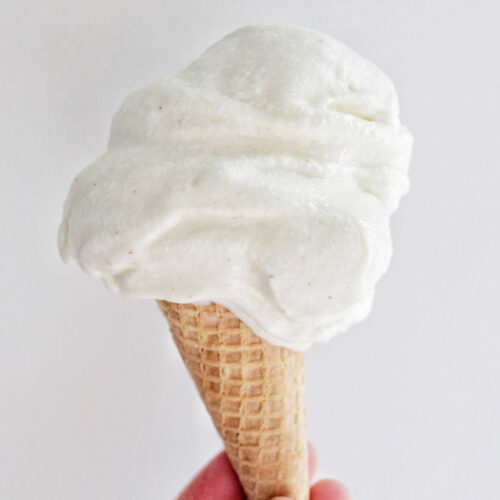
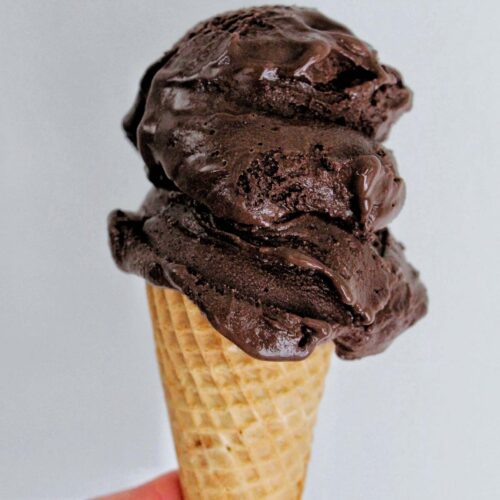
Gelato Recipes To Try
Love this guide? Please leave a comment below. Don't forget to follow along on Instagram, Facebook, YouTube, and Pinterest for more recipes.


Leave a Reply